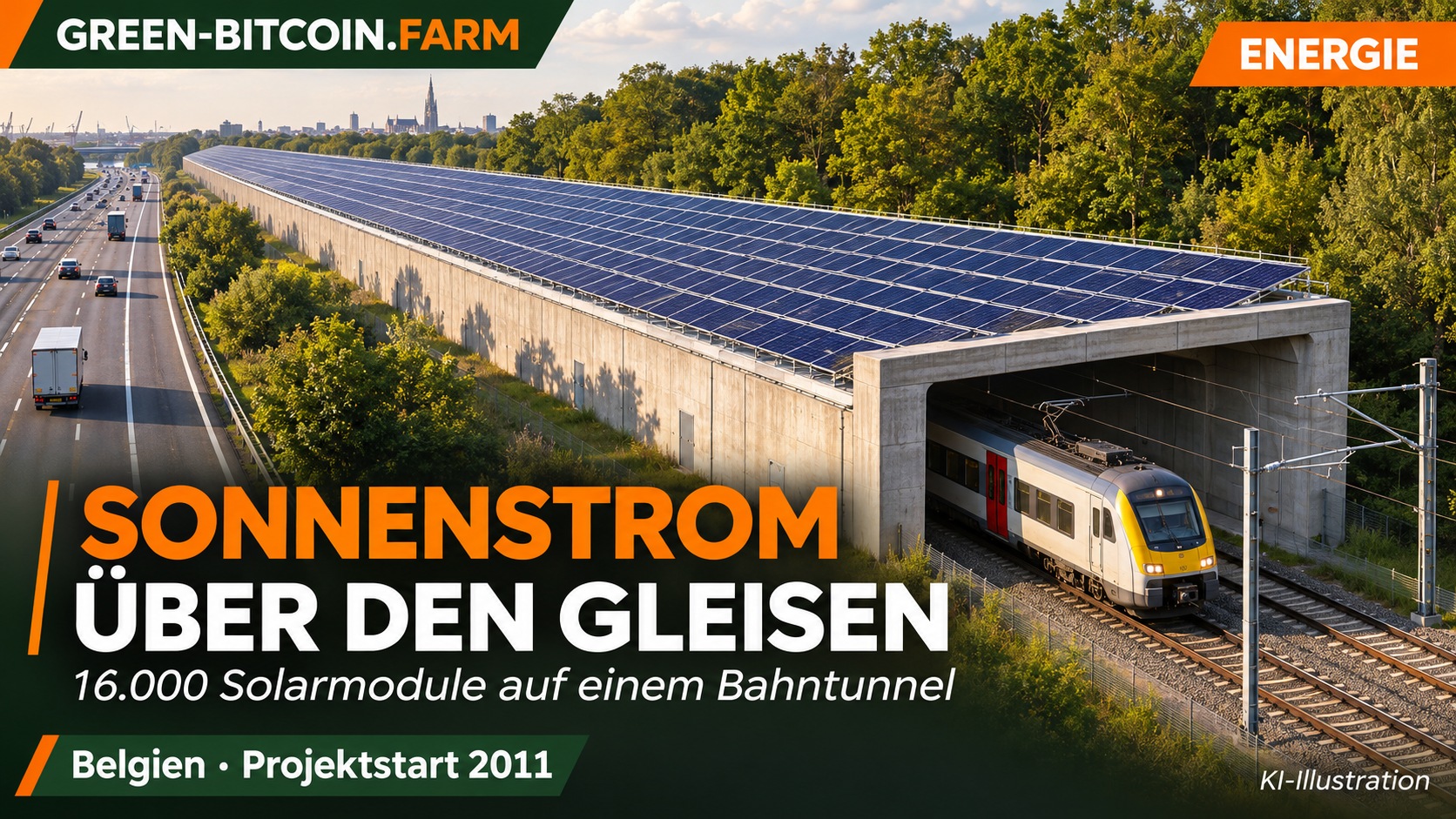
Back in 2011, around 16,000 solar modules entered service on the roof of a tunnel on the Antwerp–Amsterdam high-speed railway. According to the International Union of Railways (UIC), the installation extends over approximately 3.4 kilometres and covers around 50,000 square metres.
The electricity is intended for railway operations: alongside trains, signals, lighting and station facilities can benefit. At the project’s launch, module manufacturer JinkoSolar reported expected annual generation of around 3.3 million kilowatt-hours. This figure is the forecast from that time; this article is not based on a current measurement of output.
One surface, several purposes
The solar modules use the roof of an existing railway structure. That is the strength of the concept: a surface already serving one purpose gains another function.
From GBF’s perspective, this is an interesting approach to the energy transition. Planning should include a look at roofs, canopies and other existing structures. Which surfaces could generate electricity alongside their original role?
This idea connects the Belgian example with our vision in Tenerife: making sensible use of available space and combining energy generation with other functions. On the farm, we are considering agriculture and photovoltaics, among other things.
There is no verified connection between this railway project and Bitcoin mining. For GBF, it is a clear example of how solar energy can be integrated into existing structures.
Which existing surfaces would you equip with solar modules first?