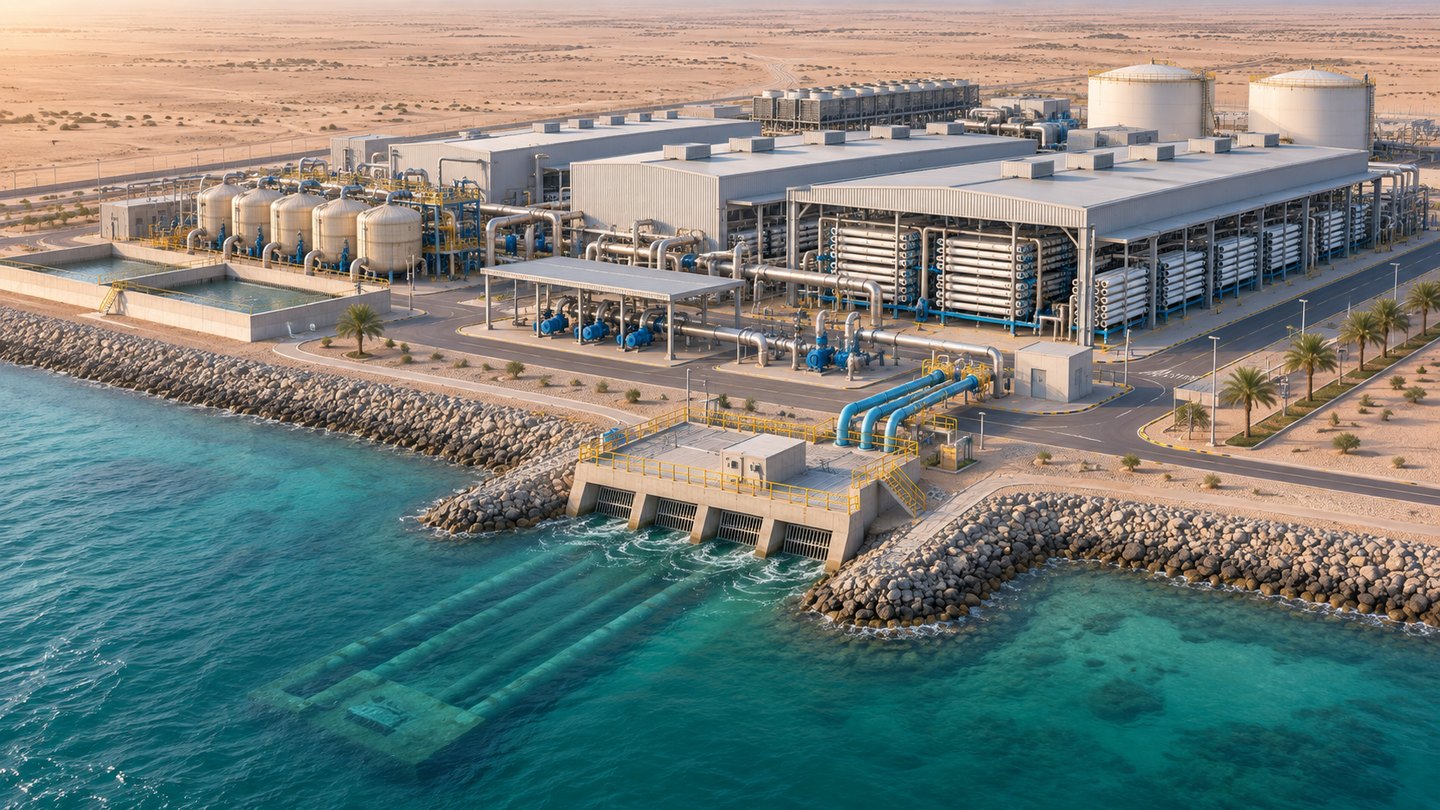
Dubai produces drinking water from the Persian Gulf at Hassyan. The public utility Dubai Electricity and Water Authority (DEWA) commissioned the first block in 2026. The figure of about 273 million litres per day refers to its capacity. The project announcement does not disclose actual output on any given day.
What Dubai plans next
The first phase has a total design capacity of **818 million litres per day**. Technology supplier Veolia says this is enough to supply around two million people with drinking water. Project developer Acwa lists **15 February 2027** as the planned commercial operation date for phase one.
On **6 November 2026**, DEWA and Acwa signed agreements for the second phase, which is expected to add about 272 million litres of daily capacity. Once both phases are complete, Hassyan would be the world’s largest seawater reverse osmosis plant, according to DEWA.
How seawater becomes drinking water
In reverse osmosis, pumps force seawater through membranes that retain dissolved salts. Veolia puts Hassyan’s projected energy consumption at **2.9 kilowatt-hours per cubic metre**. At full phase-one capacity, this works out to just under **2.4 gigawatt-hours per day**. Veolia has announced the use of solar energy. The published project information does not specify what share of electricity demand it will cover.