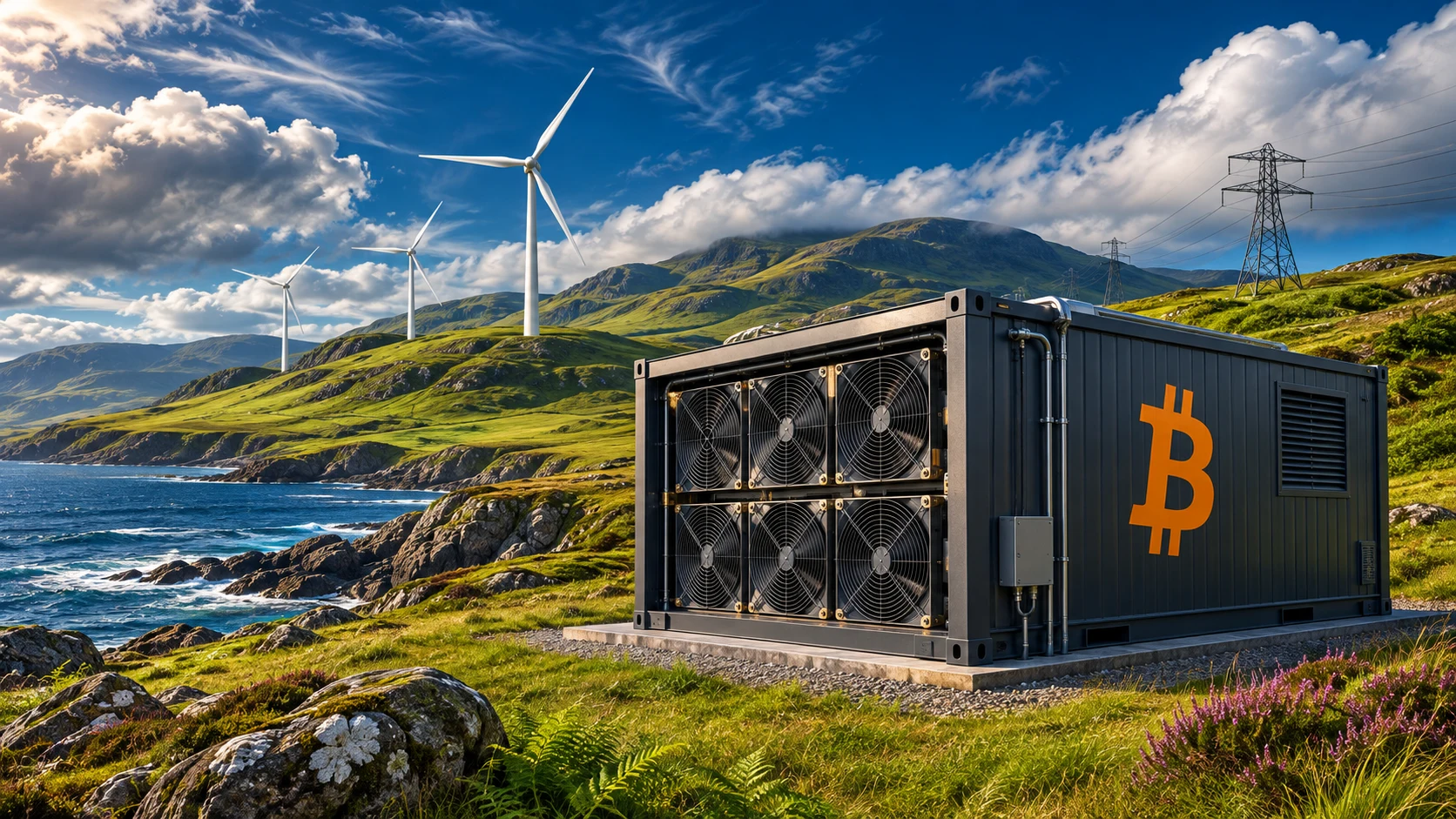
Scotland can have more wind power available than its transmission lines can carry to consumers. Generation is then curtailed. On 14 November, CoinDesk reported a Bitcoin Policy Institute proposal to use some of that energy locally for mining. CryptoSlate examined the debate on 15 November using recent grid-operator figures.
Location and timing matter
A miner would need a connection on the surplus side of the bottleneck and would have to operate when that electricity would otherwise go unused. It would need to reduce demand when power becomes scarce. A miner connected anywhere else does not necessarily help. Viability depends on connection costs, electricity prices, hardware and available operating hours.
A grid bill is not mining income
Britain’s grid operator NESO projects around £3.9 billion in thermal constraint costs for 2027. This is a conditional projection, not a fixed future bill. Thermal constraints concern the safe carrying capacity of transmission lines, rather than a shortage of cooling.
The total covers more than payments to wind farms to reduce generation. NESO says about 75% of thermal constraint costs in 2025/26 were for replacement energy, predominantly from gas plants. The entire bill therefore cannot be treated as potential mining savings.
What mining could do, and what remains unproven
Our interpretation: a suitably controlled mine could consume power locally that would otherwise be curtailed. It does not create more transmission capacity. If demand beyond the bottleneck stays unchanged, electricity must still be supplied there. Less curtailment does not automatically mean an equivalent reduction in gas use, consumer bills or emissions.
Cambridge’s mining industry report documents participating firms reducing electricity demand at times. That supports the practical flexibility of mining, but does not establish profitable intermittent operation in Scotland. The approach described here remains a proposal, rather than evidence of an operating British project.
What this means for Green Bitcoin Farm
Our farm planning in Tenerife raises the same practical question at a smaller scale: what electricity remains after essential loads have been supplied? We consider mining as one possible use for that surplus, alongside direct consumption, storage and potential export.
Both output per kilowatt-hour and total project economics matter. A miner running only a few hours must still recover its purchase cost. Our aim is to use solar electricity sensibly and adapt operation to the energy available.