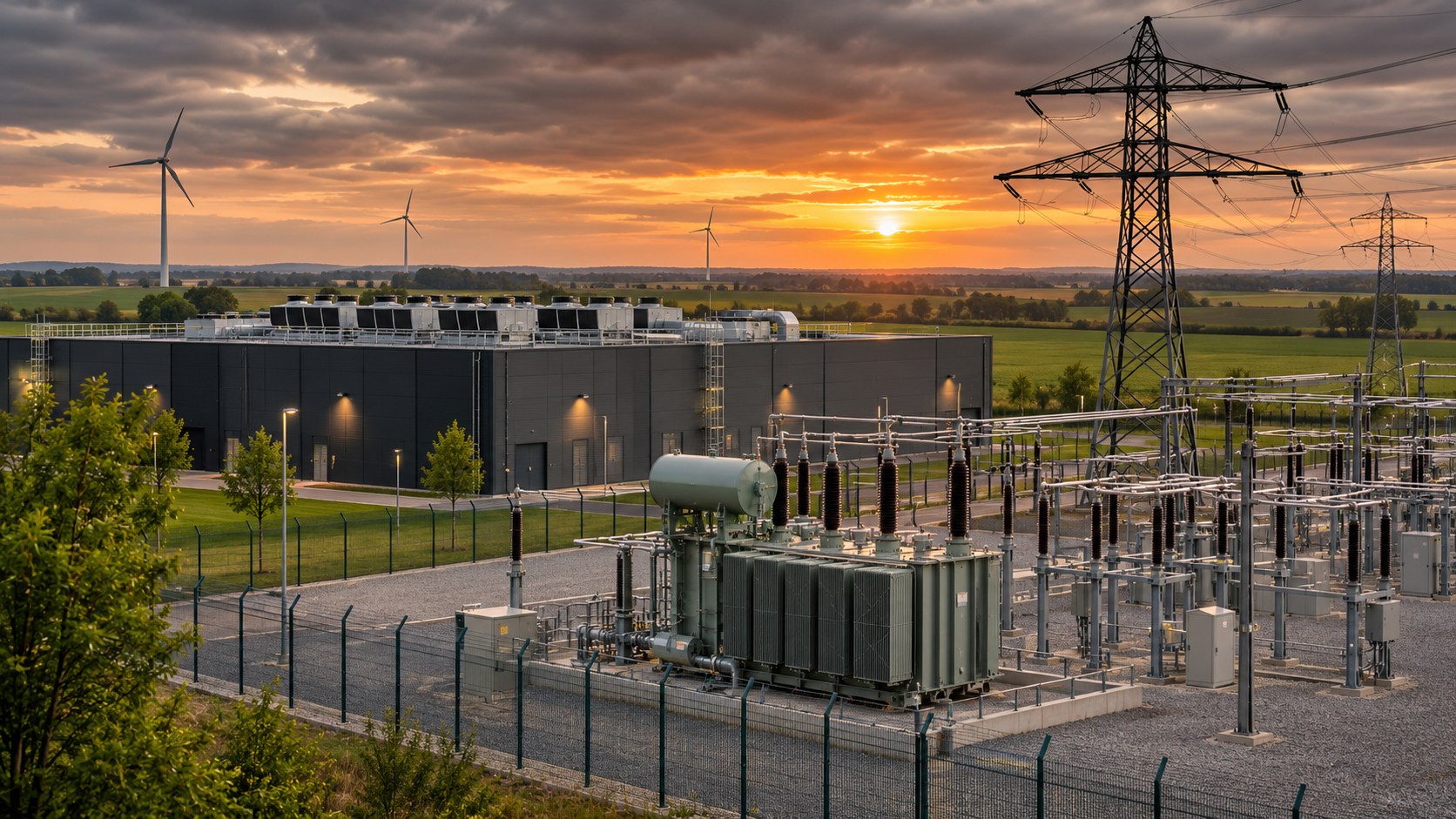
On 17 November, BILD reporter Gonne Garling warned of a power emergency and a decade of economic stagnation. The immediate trigger was a letter from EWE Netz to mayors and district administrators in its service area, seen by Handelsblatt. According to the letter, many requested grid connections may be unavailable or significantly delayed. BILD reports that EWE Netz estimates that adding new grid capacity will take at least ten years. That estimate applies to the grid expansion described in the letter. Nationwide economic stagnation is BILD’s interpretation.
What is changing in Hamburg
Since 2 November, Hamburg’s grid operator has used an annual allocation process for new connections above 1.5 megavolt-amperes (MVA). It replaces the first-come, first-served approach for these applications. The first round focuses on projects providing essential local services. For a new factory or data centre, the capacity available at the specific site and the date it can be provided are critical.
What the regulator says about security of supply
Germany’s Federal Network Agency assesses how much dispatchable capacity will be needed by 2035 to meet electricity demand even when it is high. Its 2025 monitoring report estimates gross additions of up to 22.4 GW in its target scenario and 35.5 GW if the energy transition is delayed. These are scenarios for the coming years. The grid connection cases cited by BILD do not establish a link with the nuclear phase-out.
The GBF perspective on flexible electricity use
A Bitcoin miner can reduce its power draw or switch off when less power is available at the site. At a solar farm, it could run when there is PV generation left after other on-site needs have been met. For grid-connected facilities, the Federal Network Agency describes flexible connection agreements under which the grid operator caps power draw permanently or at certain times. Whether this helps locally depends on when the bottleneck occurs and whether the operator can reduce consumption at that moment.