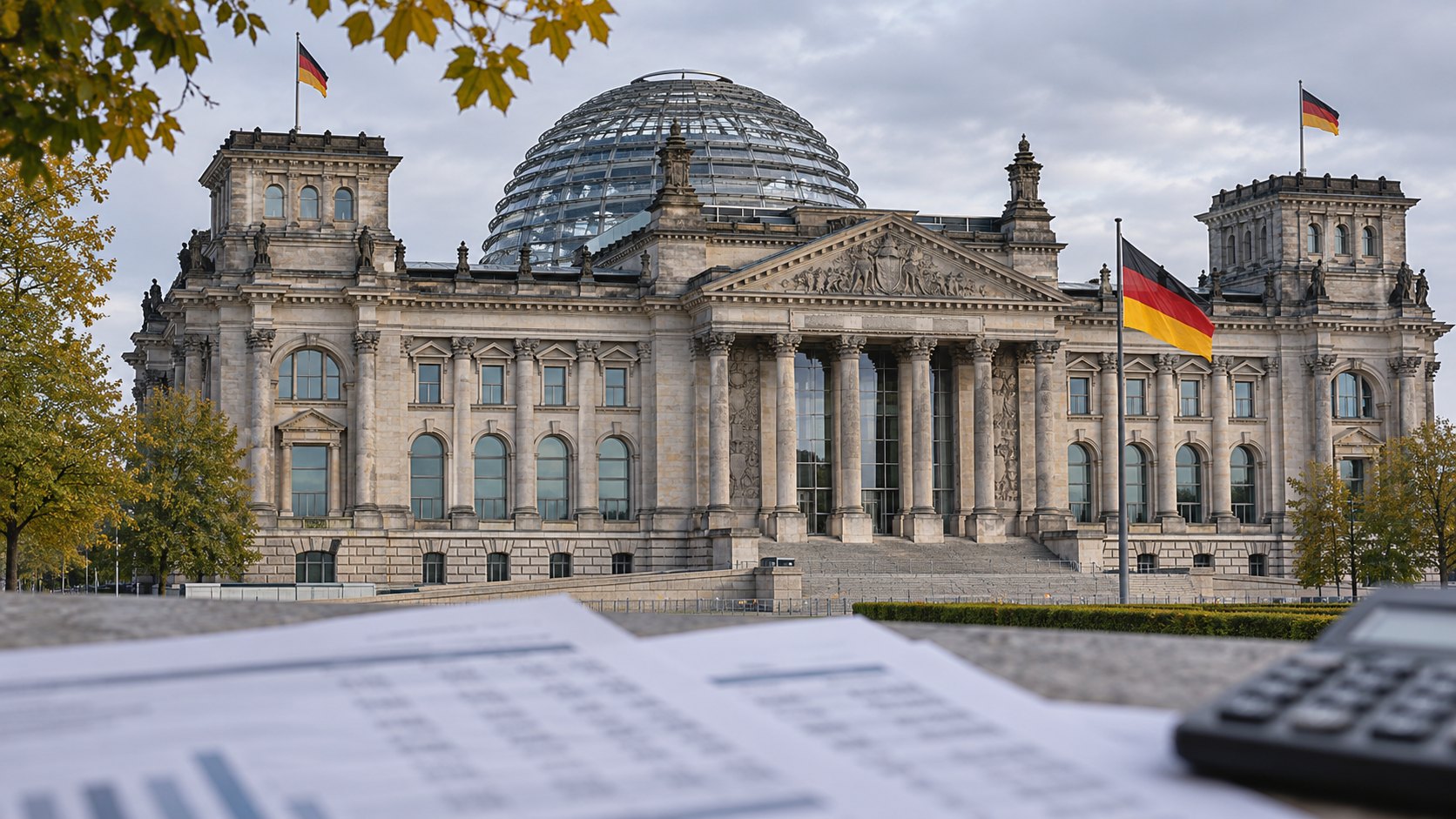
Veronika Grimm used the latest budget negotiations to criticise federal spending policy. In her view, promises of additional benefits and growing energy subsidies further constrain fiscal room. She also cautions against further tax increases, arguing that a higher burden could dampen investment and employment and ultimately weaken the state’s revenue base. That is Grimm’s assessment in her November 18 guest column.
What the financial plan says
In August, the German government presented its financial plan through 2030. It identifies outstanding budget adjustments of about €22 billion in 2028, €39 billion in 2029 and €48 billion in 2030. The figures indicate the scale of the decisions still needed in coming budgets. Planned net borrowing is a separate figure. The Finance Ministry puts it at €152 billion in the federal budget for 2029.
Interest is one reason for the tighter budget. The financial plan projects interest spending in the core budget of about €42 billion in 2027 and just under €81 billion in 2030. The government attributes the increase mainly to higher debt and rising yields on federal securities. With revenue unchanged, every additional euro spent servicing debt leaves one euro less for other purposes.
The decisions ahead
In its annual report, the German Council of Economic Experts also warns that expected federal revenue will fall short of planned spending over the longer term. This makes a practical energy policy question more pressing: Which measures provide short-term relief to households and businesses, and which investments lower their costs over time? Both require funding. As social spending, defence and interest take up more of the budget, the federal government must explain more clearly how it uses the room it has left.